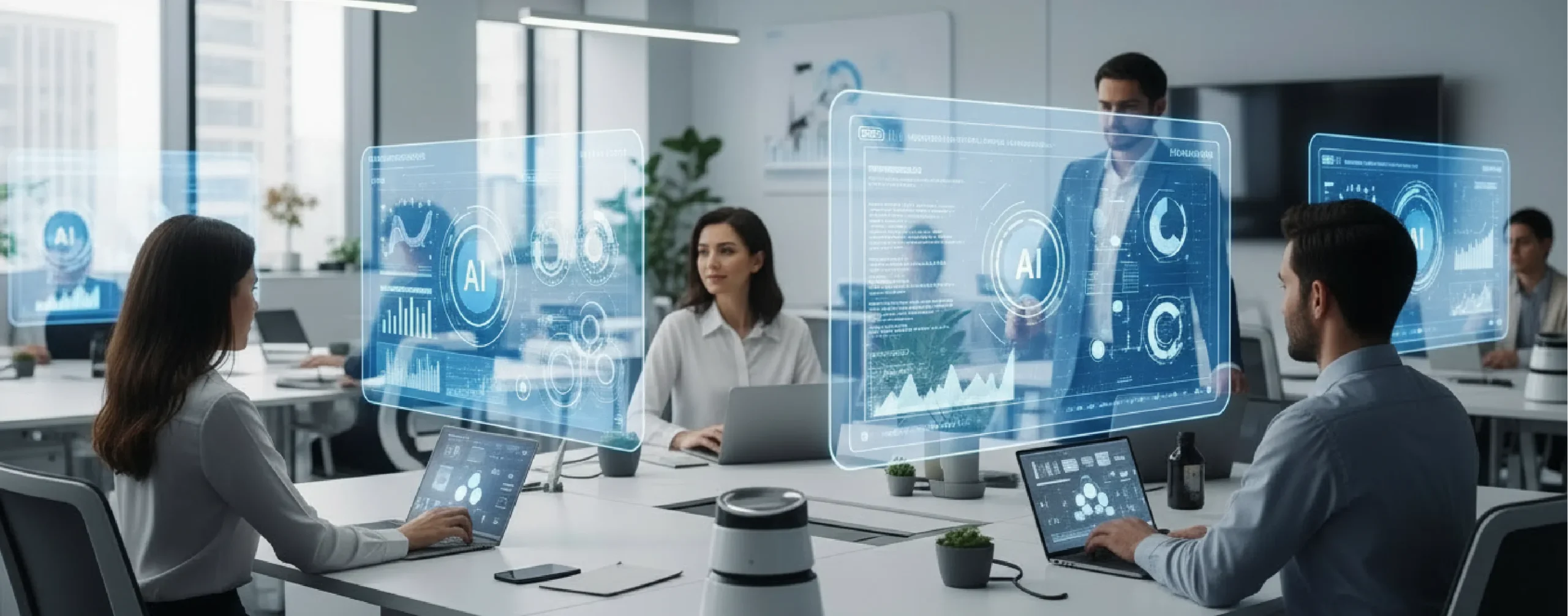
Why AI-Augmented Teams Are the Future of Tech Talent
The way companies build technology teams is changing faster than ever before. Growth once meant hiring more people and expanding departments. That method no longer represents progress. The most forward-thinking companies have learned that true growth now comes from integrating artificial intelligence into everyday work.
Tech talent has expanded beyond skill and experience to include intelligent systems that support human capability. Developers, analysts, and designers now rely on AI for speed, precision, and insight. Companies apply this model daily, replacing large staffing requirements with smaller AI-augmented teams that deliver stronger outcomes in less time.
Smaller groups now handle complex projects with greater accuracy than large traditional teams could manage a few years ago. Artificial intelligence has become the quiet force behind this transformation, allowing people to focus on creative problem-solving while automation manages structure and repetition.
From Hiring More to Working Smarter
The technology industry once measured progress by how many people it employed. That view has become outdated. Artificial intelligence has changed what productivity means by handling the repetitive side of work, so professionals can spend time on innovation and critical thinking.
Gartner predicts that more than half of all digital workers will use AI copilots every day by the end of this year. That includes software developers, managers, analysts, and other professionals across multiple industries. This development has already reshaped how teams function.
Automation systems now handle documentation, testing, and scheduling, allowing professionals to focus on project architecture and user outcomes. When companies adopt AI-assisted models, they discover measurable results: reduced project cycles, fewer bottlenecks, and improved satisfaction.
These benefits have changed how tech talent is measured. Instead of evaluating productivity by numbers, leaders now assess impact per person. Teams that use AI work smarter and deliver faster without losing precision.
AI-Augmented Teams and How They Operate
AI-augmented teams are structured around human expertise supported by automation and data intelligence. They are smaller than traditional development departments but achieve far greater output because every member works alongside AI copilots.
For example, developers use GitHub Copilot to write cleaner code with fewer revisions. Managers rely on Power Automate to handle routine follow-ups, reducing administrative load. Analysts turn to Power BI to visualize real-time performance metrics and uncover patterns instantly. These systems interact continuously, building momentum that allows projects to progress faster without interruptions.
This collaboration produces measurable improvement. Delivery times have shortened dramatically since 2022, and accuracy levels have remained consistent. Instead of passing work between departments, AI systems handle synchronization while people focus on creative direction and quality assurance.
Each step of the process benefits from this integration. Development becomes smoother, reporting becomes clearer, and teams spend less time correcting errors that once delayed progress. This is how AI in workforce structures redefine productivity in real, measurable terms.
Measuring Talent by Impact Instead of Headcount
The meaning of tech talent has changed. It no longer refers to the number of people working in a department but to the degree of influence each professional can create. A single developer with access to advanced AI can now complete what once required several colleagues.
McKinsey’s analysis estimates that automation could cover 30% of development tasks by 2030. Many companies have already reached that level through early adoption. Activities such as code review, system monitoring, and quality checks are now managed through automation while engineers focus on innovation.
This shift has produced three clear advantages for companies that have embraced it:
- Higher efficiency: Teams accomplish more without extending hours or increasing fatigue.
- Improved accuracy: Automated testing reduces human error across releases.
- Creative focus: Professionals dedicate more time to new ideas rather than maintenance tasks.
These points highlight a fundamental truth: artificial intelligence does not replace people; it expands their reach. By managing predictable processes, AI gives professionals the freedom to explore complex challenges and deliver meaningful value to clients.
Global AI Collaboration
One of the strongest results of AI and human collaboration is the success of nearshore partnerships. These teams combine regional expertise with advanced automation to create high-performance systems.
The benefits extend beyond location. Companies gain smoother communication through shared time zones, fewer cultural barriers, and faster feedback. They also reduce project costs without losing technical quality. Research from Harvard Business Review notes that nearshore operations are 30 to 50% more cost-effective. When those teams integrate AI systems, efficiency increases even more.
Regions such as Latin America and Africa have become centers for next-generation tech talent. Engineers in these areas have been trained to work alongside AI copilots, combining technical knowledge with adaptability. This structure provides clients with continuous progress across time zones and consistent quality from concept to completion.
The Human Cloud and Upskilling for the AI Future
Many companies use Human Cloud to connect global professionals through intelligent systems that synchronize communication, reporting, and delivery. Instead of functioning as isolated departments, teams around the world now work as one connected network guided by AI.
This approach gives tech talent worldwide reach. Engineers, analysts, and managers contribute to shared projects regardless of geography. AI tools support translation, scheduling, and task tracking, ensuring that no progress is lost across time zones.
Upskilling is the foundation of this model. And good companies invest in continuous learning through certification and leadership programs, including Microsoft Certification, Scrum Master training, and advanced AI learning paths. These initiatives prepare every professional to adapt as technology advances.
As the workforce evolves, knowledge becomes the strongest asset. Teams that continue to learn and apply AI effectively will remain relevant and competitive across global industries.
Conclusion
The way teams plan, think, and execute is evolving with the rise of artificial intelligence. By blending advanced technology, data systems, and human judgment into a unified process, AI has redefined what productivity means. This collaboration allows professionals to tackle complex challenges while intelligent systems handle repetitive and data-heavy tasks. As a result, teams remain focused on strategic and creative goals, projects move faster, and errors are minimized.
The next chapter of technological progress continues to be shaped by the powerful partnership between human expertise and digital precision.
Businesses that understand how to use AI responsibly and practically are already seeing improved outcomes at every level of their operations. Those who can adapt, learn new things constantly, and work well with intelligent systems will be the future of IT skills. The effectiveness with which people and technology collaborate to achieve common goals now determines progress rather than the quantity of the workforce.
Arthur Lawrence supports this change by helping organizations find and hire skilled professionals who can work confidently with AI-supported environments. Through its global tech talent network, it connects companies with the expertise needed to achieve dependable and lasting outcomes.